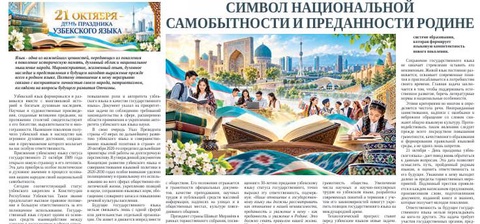

Over the past 37 years, much has changed. The Uzbek language has become firmly established in the life of the country, and the areas in which it is used have expanded. When assessing these changes, it is important to consider the historical circumstances that shaped different generations’ attitudes toward their native language. This is particularly relevant to people who received their education before the republic gained sovereignty. During that period, professional habits were formed, reading preferences developed, and patterns of intellectual growth took shape.
Personal experience makes it possible to assess this not only from a historical perspective but also on an individual level. For example, speaking several languages has never hindered the desire to gain a deeper understanding of the Uzbek language, as well as the history and culture of one’s people. On the contrary, the country’s declaration of independence awakened an inner need to make up for what had previously remained insufficiently studied.
Language preferences are often shaped by historical circumstances, education, and professional activity. The experience of older generations cannot be mechanically applied to today’s young people, who have grown up in an independent Uzbekistan. They have different educational opportunities and conditions for cultural development. Therefore, it is necessary to distinguish between personal language habits, professional requirements, and obligations established by law.
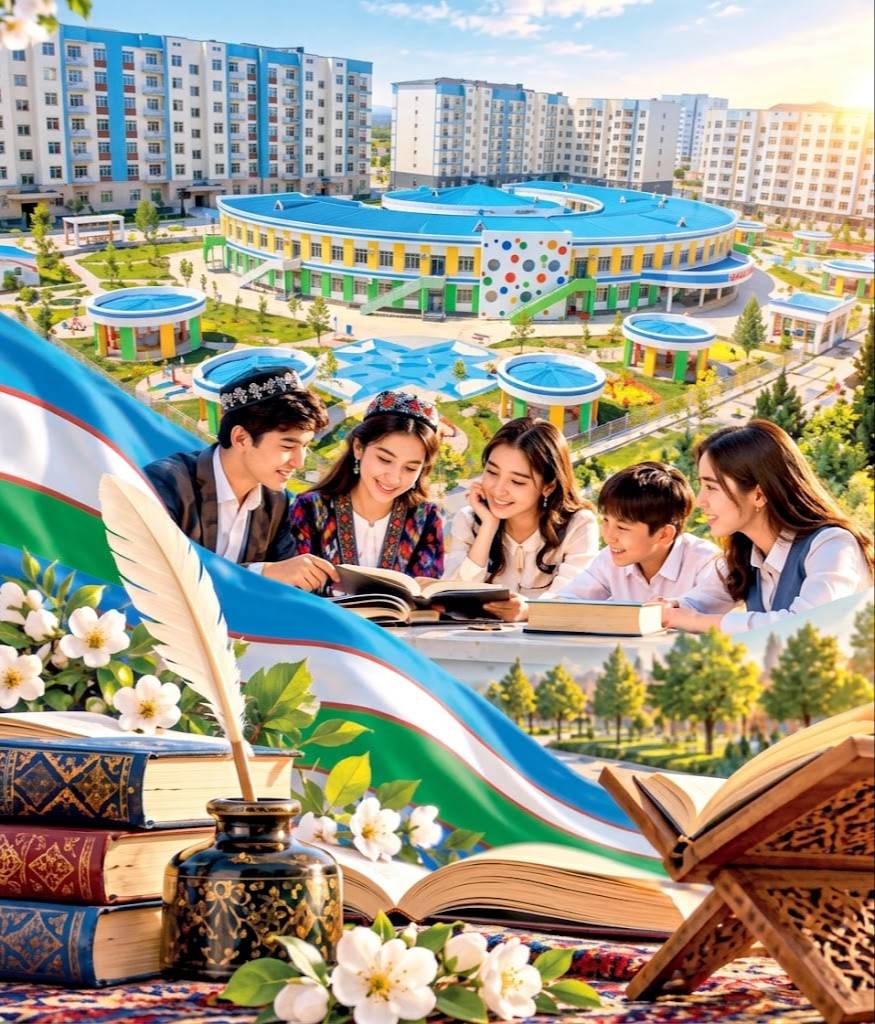
Over more than three decades, the Uzbek language has strengthened its position in political and public life. For young men and women in Uzbekistan, its status as the state language has become a natural part of everyday life. Many speak English and other foreign languages, study abroad, and explore the achievements of world science and culture. At the same time, their native language remains the foundation of their national and cultural identity.
This reflects one of the significant achievements of independence: learning foreign languages is no longer seen as a need to relegate one’s own culture to the background. People can remain open to the world, communicate freely with citizens of different countries, and maintain a deep connection with their national roots. Previous generations did not always enjoy such freedom of choice.
Another aspect of this issue concerns the culture of communication between speakers of different languages. Uzbekistan has historically been a multinational country. Today, representatives of more than 130 nations and ethnic groups live here, and 157 national cultural centers operate throughout the country. Behind these figures lies centuries of interaction between civilizations and traditions.
A distinctive environment has developed in the country. For many members of different national communities, their native language remains the familiar means of communication—not only among older people but also among young people. Uzbek unites the country’s citizens as the state language and serves as a means of communication between representatives of different nationalities. This principle is enshrined in the Law “On the State Language of the Republic of Uzbekistan,” adopted on October 21, 1989, and was retained in its revised version, adopted on December 21, 1995.
In particular, Article 3 states:
“Persons residing in the territory of the Republic of Uzbekistan shall be guaranteed the right to address state and public organizations and institutions in the state language of the republic with applications and proposals, complaints, and to receive responses to them in the state language. Citizens shall also be guaranteed the right to address these organizations in other languages and to receive responses in the state language and in the language of interethnic communication.”
Granting the Uzbek language the status of the state language does not infringe upon the constitutional rights of representatives of other nationalities to use their native languages.
The historical significance of the 1989 law lay in restoring the Uzbek language to its rightful position in public life. For the generation that experienced the restrictions of the previous era, the opportunity to study their native language freely and explore their people’s history and cultural heritage holds particular value.
National identity is expressed through knowledge of history, respect for cultural heritage, one’s attitude toward the homeland, professional activities, and personal actions.
Thirty-seven years after the adoption of this historic law, the Uzbek language faces new challenges. Expanding its areas of use must go hand in hand with improving the quality of teaching, developing scientific and literary expression, and refining professional terminology. Its continued development will depend largely on how precisely and eloquently it can convey complex scientific ideas and how naturally it is used in education and professional environments.
The law defines the language’s legal status and establishes requirements for its use. However, richness of expression, depth of knowledge, and genuine respect for one’s native language do not arise automatically from legal provisions. They develop through education, intellectual work, and everyday communication.
The true strength of a state language is reflected in how fully we ourselves unlock its potential in science, education, culture, and public life. This is how we continue the historic undertaking that began with the decision adopted on October 21, 1989.
Mavlyuda Abdullaeva Professor at the University of Public Security of the Republic of Uzbekistan.