


The citizen
immediately reported the discovered find to the specialists of the Samarkand
Archaeological Institute named after Ya. Gulyamov.
The
institute’s specialists examined the site of discovery and carried out an
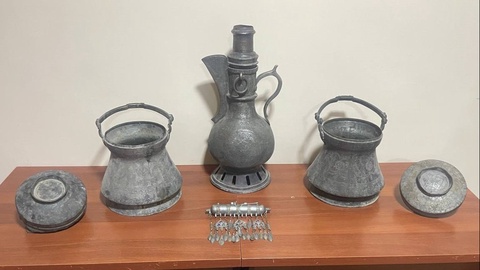
initial assessment of the finds. The identified archaeological items and human
bone remains were documented in accordance with the established procedure and
submitted for scientific study.
According
to preliminary observations, some of the discovered bronze bracelets have cone‑shaped ends and a spiral‑shaped ornamentation. In terms of
form and design features, they are similar to the ornament’s characteristic of
the culture of steppe pastoral tribes that lived during the late stage of the
Bronze Age.
Archaeological
materials dating back to the Bronze Age and associated with the culture of the
steppe pastoral population have previously been found at a number of
settlements and burial grounds in the Zarafshan Valley. Such monuments are
usually dated to the 13th–10th centuries BC and belong to the Andronovo‑Tabazyab cultural complex.
At the same
time, the exact dating and cultural affiliation of the new find discovered in
the village of Darvozagaza have not yet been established. These issues are
planned to be clarified based on the results of special archaeological
excavations, anthropological studies, and laboratory analysis of metal
artifacts.
The Agency
of Cultural Heritage of the Republic of Uzbekistan reminds that if ancient
objects, remains of structures, or human bones are discovered during excavation
or construction work, work must be immediately stopped and the discovery must
be reported to the relevant government agencies and archaeological specialists.
Timely and
responsible handling of such finds contributes to the preservation of cultural
heritage and its transmission to future generations.