
According
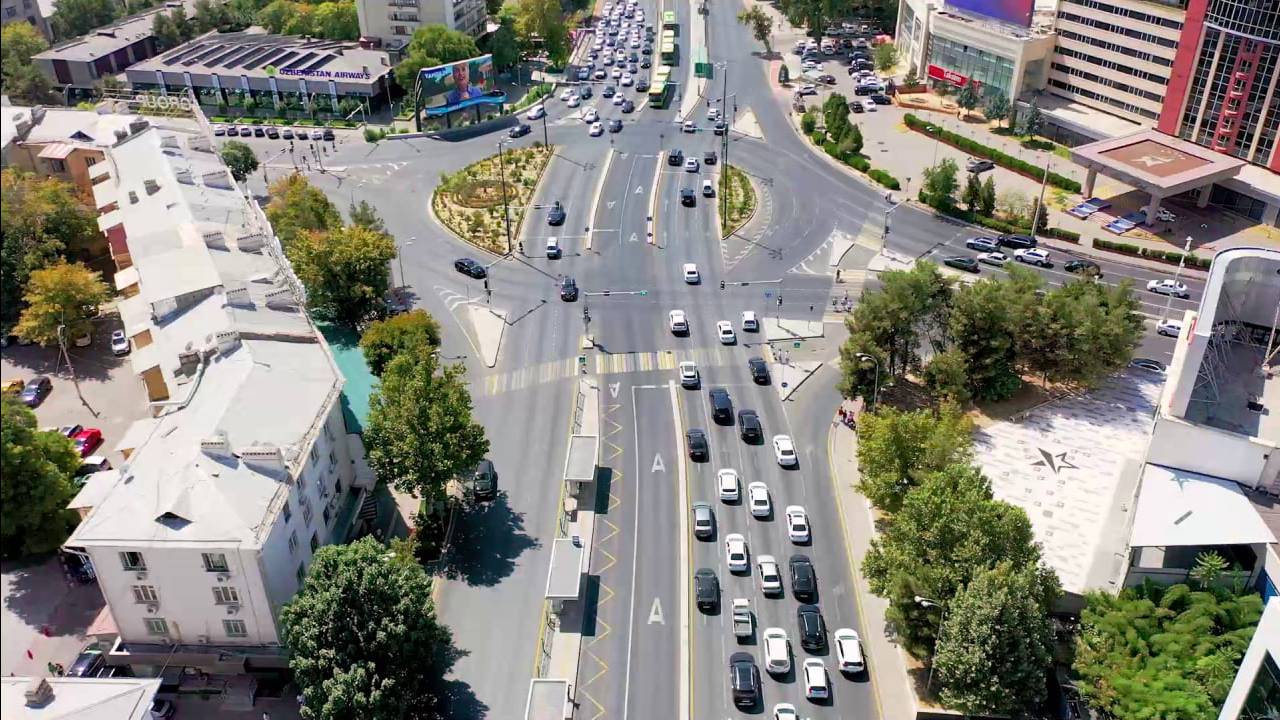
to the Traffic Management Center, this stage of the project covered a section
1.2 kilometers long — from the roundabout at the intersection of Shakhrisabz,
Mirabad, and Shota Rustaveli streets to the intersection with Amir Temur
Avenue.
During the
construction work, the work was not limited to updating the existing asphalt
surface. Given the regular movement of large‑capacity buses and the constant load on the BRT lane, the road structure
was completely rebuilt, including the subbase.
To achieve
this, earthworks were carried out in certain areas to a depth of more than 2
meters, the existing base was dismantled, and the road surface was re‑formed. To reduce the impact of groundwater, prevent soil displacement,
and avoid subsequent subsidence, geotextile was laid.
After that,
the road base was strengthened in stages:
a sand‑and‑gravel mixture 35 centimeters thick
was laid;
a
reinforcing layer of grade M‑75 was constructed.
Coarse-grained
asphalt concrete with a thickness of 9 centimeters was laid;
a layer of
SHMA‑20 with a thickness of 5 centimeters was used
as the finishing coating.
As part of
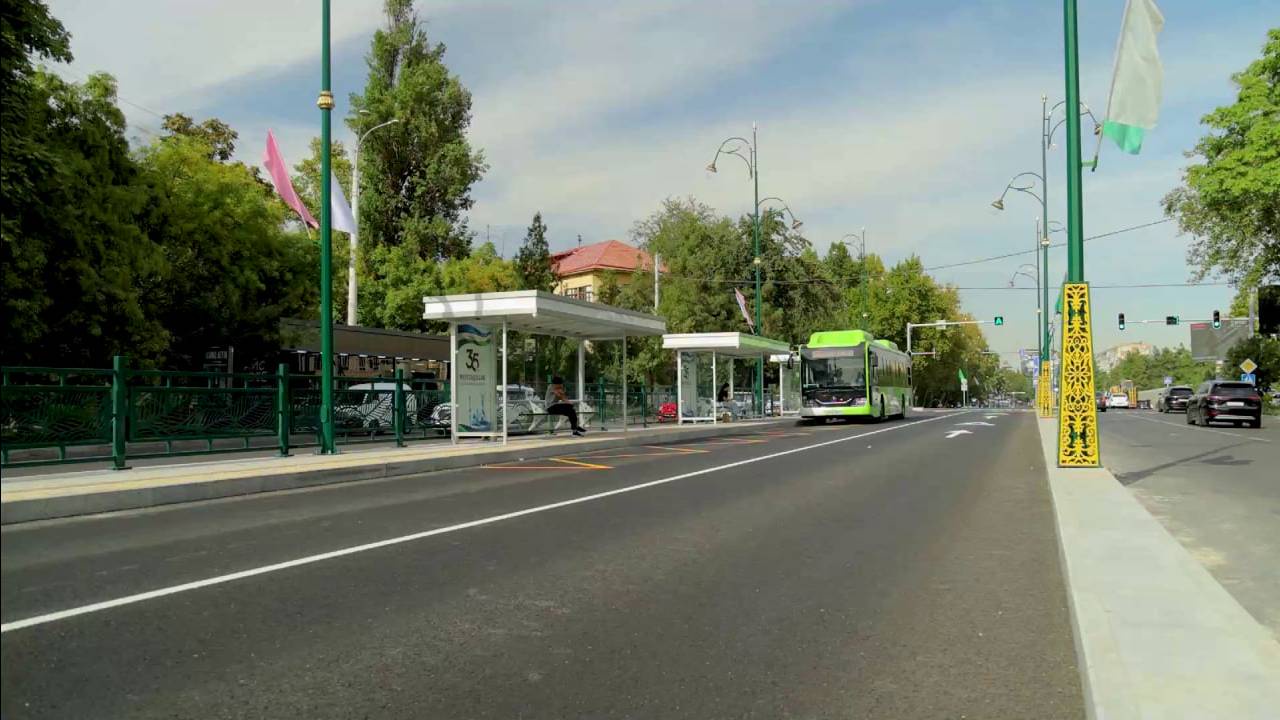
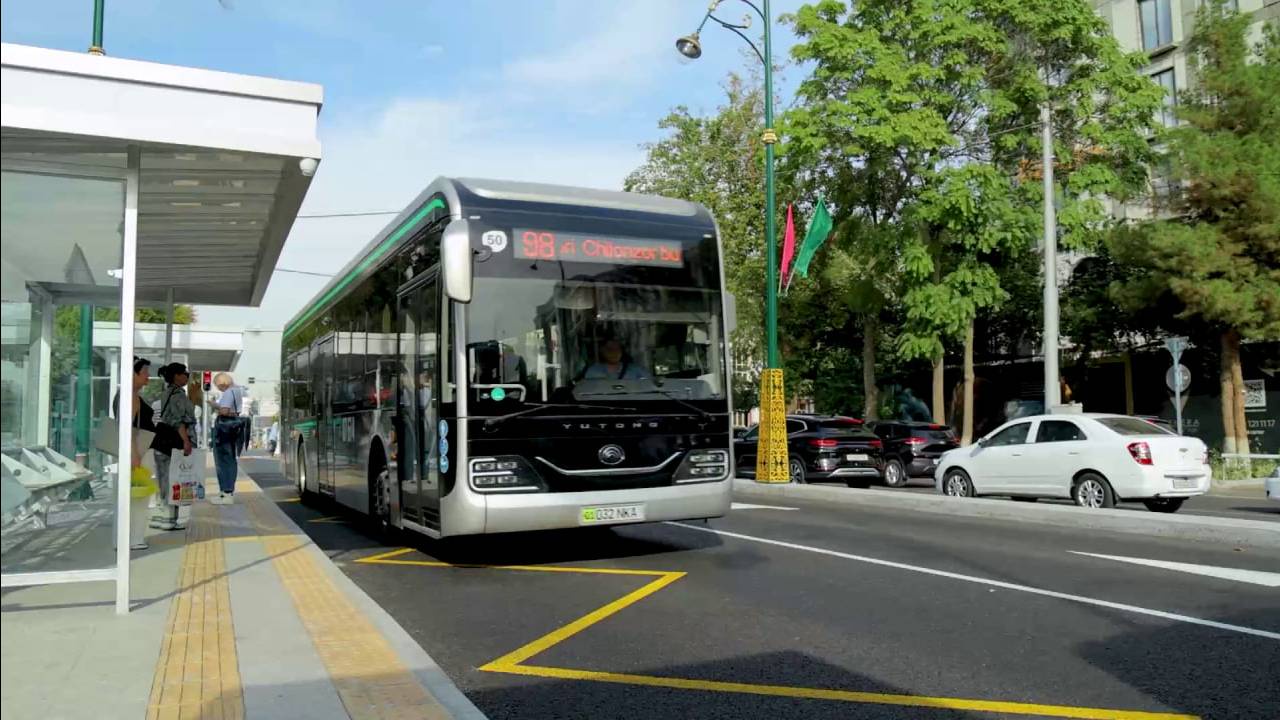
the BRT infrastructure development, 5 new bus stops were installed, and a
separate traffic lane was organized for public transport. The BRT lane is
physically separated from the general traffic flow by curbs.
This
solution helps reduce buses’ dependence on traffic jams, increase the stability
of service intervals, and create safer conditions for approaching and leaving
bus stops.
During the
construction period, traffic was not completely disrupted. The work was carried
out in stages on the central lanes of the roadway, while traffic in both
directions continued along the rightmost lanes of the street.
The 1.2‑kilometer section is the first stage in the development of BRT
infrastructure on Shakhrisabz Street. As part of the overall project, it is
planned to organize a BRT lane along approximately a 3‑kilometer section of Shakhrisabz Street.
The
commissioning of the new BRT section on Shakhrisabz Street is a continuation of
the systematic work aimed at gradually developing a modern road infrastructure
in the capital, with public transport given priority.