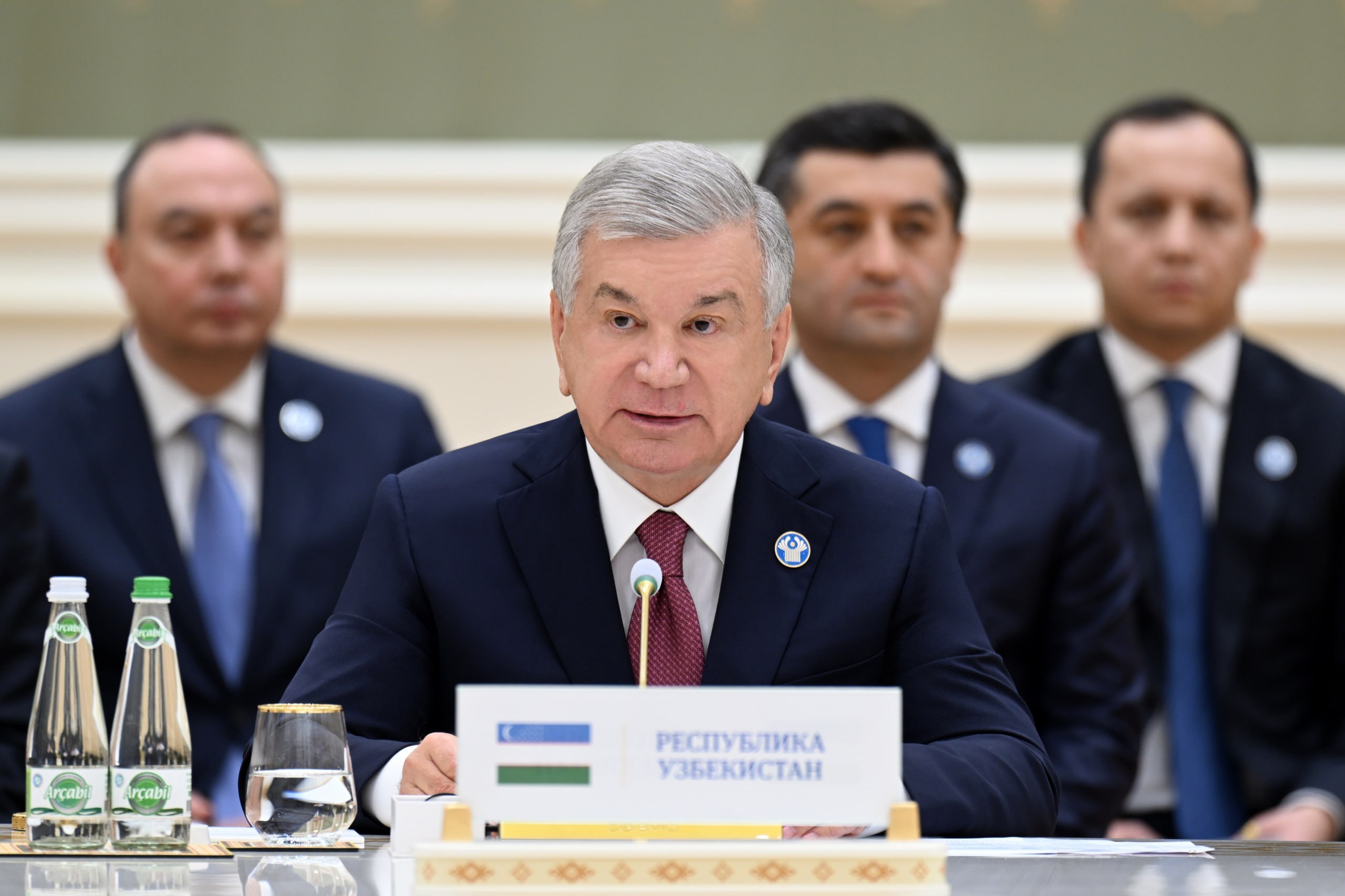

On October 6, 2026, Qu Dongyu, Director-General of the Food and Agriculture Organization of the United Nations, presented President Shavkat Mirziyoyev with the Agricola Medal, FAO’s highest award. To see it as just another international honor would diminish its significance. Agricola means “farmer” in Latin. Established in 1977, the medal recognizes statesmen and public figures who have made a practical contribution to ending hunger, strengthening food security, and advancing rural development. Over the years, this distinction has been conferred on prominent world leaders. Recent recipients include Indian Prime Minister Narendra Modi, Egyptian President Abdel Fattah El-Sisi, and King Abdullah II of Jordan. Each was recognized for contributions to strengthening food security, transforming agrifood systems, improving farmers’ livelihoods, and advancing regional and international cooperation.
The front of the medal bears the recipient's name and likeness, while the reverse carries the principle that guides his life. The medal presented to the President of Uzbekistan is inscribed: “To devote all our strength, energy, knowledge, and potential to the happiness and prosperity of our people is the highest honour.” These words closely reflect the substance of Uzbekistan’s agricultural reforms in recent years. Every change in land, water, science, and government management must ultimately be felt at the family table, in household income, and in people’s confidence in tomorrow.
The basis for this recognition
Presenting the medal in person, FAO Director-General Qu Dongyu said during an open, face-to-face conversation with President Shavkat Mirziyoyev: “You are a true leader, a world leader, and, most importantly, a peacemaker.” He explained that a special FAO assessment team studied the President’s work, reforms, and results over an extended period before reaching this conclusion. The decision was therefore not based on a single impression or ceremonial courtesy. It was an international judgment grounded in long-term observation, comparison, and measurable results.
During the conversation, the President emphasized that the market is the central test of agriculture. Food prices directly affect household well-being and inflation. As the President put it, inflation is a “tax” that falls more heavily on low-income families than on the wealthy. He therefore treats food prices as a leadership priority and begins each morning by reviewing food prices in the markets. He followed the same practice when he served as prime minister and regarded producing enough food for the nation as a paramount responsibility. Qu Dongyu praised this approach and said that not only heads of state, but also government and sector leaders, should learn from it. This is more than a daily routine. It is a leadership culture that puts people’s interests first.
According to FAO estimates, undernourishment in Uzbekistan was close to 20 percent in 2000. For the past decade, it has remained below 3 percent. This may seem like a single statistic, but it reflects an entire system: grain production, fruit and vegetable farming, horticulture, livestock, poultry, fisheries, food processing, market infrastructure, and policies to raise household incomes.
This progress cannot be separated from the national poverty reduction program. Official data show that the poverty rate fell from 35 percent in 2017 to about 4 percent in 2026, reaching 3.9 percent in the latest assessment. The number of people in need declined from 2.2 million at the beginning of the year to 1.5 million. This is not merely a statistical decrease. It means millions of families have earned more, have greater access to food, and feel more confident about the future. The next phase is intended to reduce poverty further, including to 2 percent in selected regions.
Employment policy has been equally important. In 2025, five million people gained sources of income, while unemployment fell from 5.5 percent to 4.9 percent, nearly halved since the start of the reform period. The 2026 target is to secure permanent employment for one million people. Measures for the remainder of the year call for 350,000 additional permanent jobs, higher incomes for one million people, and support to lift 230,000 families out of poverty. Agriculture, processing, services, and neighborhood-based entrepreneurship are pillars of this effort. In this sense, the Agricola Medal recognizes not only agricultural production, but also an integrated approach to employment, income, and human well-being.
The answer to the question “Why Uzbekistan?” should therefore be sought not in the medal itself, but in the changes taking place across the country. The first presentation of this distinction to a Central Asian head of state recognizes tangible results in food security, agriculture and water management, regional cooperation, and reform.
Agricultural progress rooted in peace and openness
Agricultural success does not begin in the field alone. A productive field depends heavily on peace at home, trust among neighbors, open borders, trade routes, and the free movement of people. Under President Shavkat Mirziyoyev’s leadership, Central Asia has seen a new environment based on good-neighborly relations and practical cooperation. Issues that had accumulated for years began to be resolved through dialogue. New opportunities opened for cooperation in trade, transportation, water, seeds, veterinary services, and plant health.
A peaceful region built on mutual trust also gives farmers access to a larger market. Seeds, technologies, and products can reach another country more easily. When drought, disease, or market disruptions occur, neighbors can support one another. In this way, the President’s policy of strengthening peace and regional closeness has also become an important foundation for food security.
Uzbekistan as a laboratory of reform
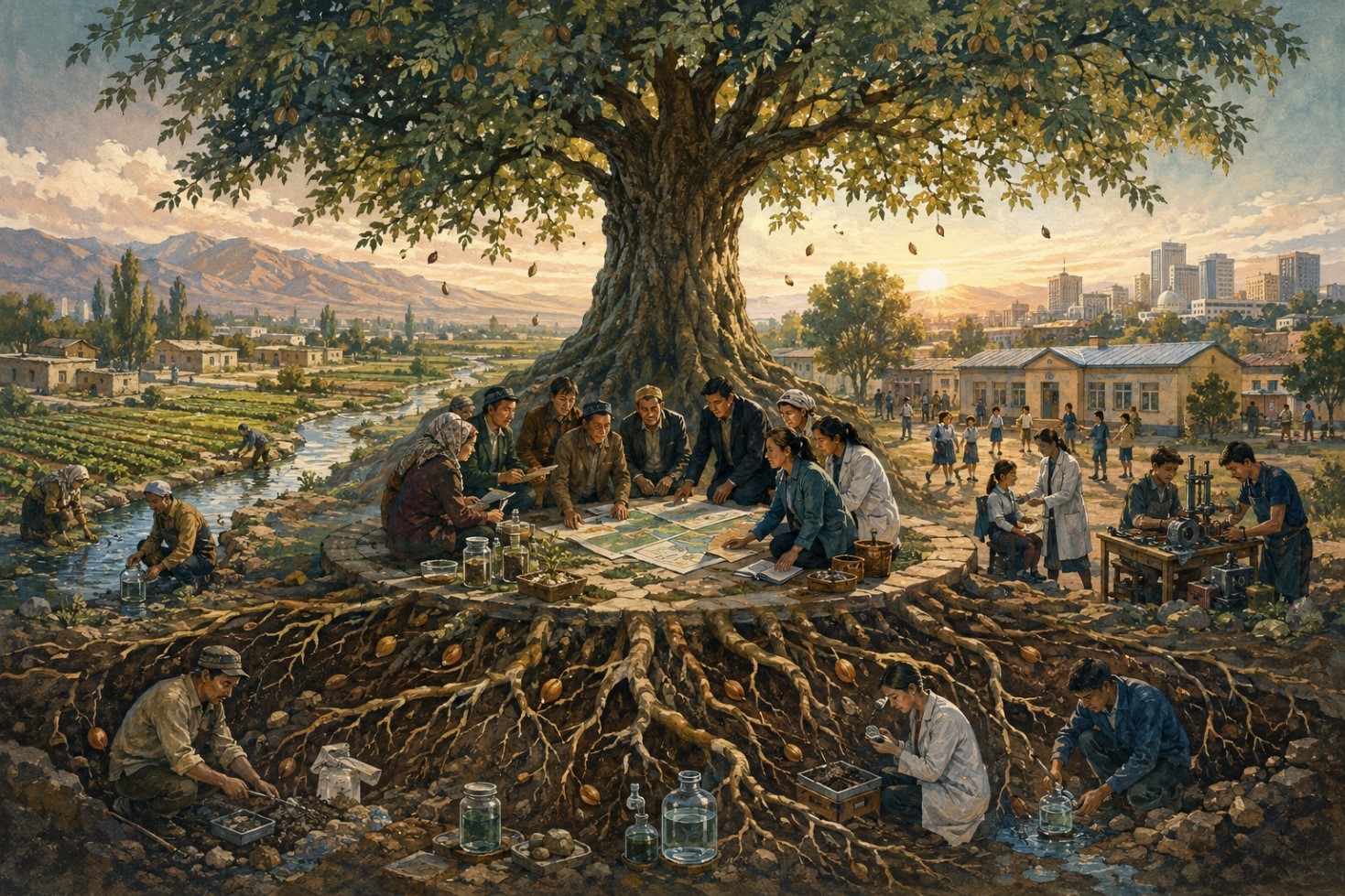
Over the past decade, Uzbekistan’s agricultural sector has become a major testing ground for reform. The country simultaneously moved away from an old system tightly bound to state orders, expanded farmers’ freedom, introduced cluster and cooperative models, digitized land and water accounting, brought science closer to the field, and broadened processing and exports. Not every solution was perfect from the outset. The defining feature of the reform process, however, was that problems were not concealed: approaches were tested, results were measured, and policies were adjusted when necessary.
This process can be described as a “living laboratory.” In a laboratory, an idea is tested under controlled conditions. In the field, nature, farmers, markets, and time test it. Uzbekistan’s reforms are passing all four tests. Their significance therefore extends beyond the country itself. They offer practical lessons for many landlocked countries with scarce water, arid climates, and growing populations.
Diversification from wheat to orchards
If bread is the first symbol of food security, wheat is its foundation. In recent seasons, Uzbekistan has tested epigenetically informed practices, including better variety placement, improved seed quality, soil and water management, balanced nutrition, and cold conditioning of seed. Across comparable production areas included in the 2026 national analysis, average yields reached 9.78 metric tons per hectare. The results show that good genetics and sound agronomy can work together to produce more from limited land.
The same logic is shaping fruit, vegetable, and orchard production. Intensive orchards, drip irrigation, modern nurseries, pest and disease monitoring, cold storage, sorting, packaging, and compliance with export standards are becoming parts of a single system. An orchard is no longer merely a place that produces fruit. It is a value chain connecting breeding, water efficiency, plant health, processing, and markets.
Growth in vegetables, fruit, potatoes, melons, meat, milk, eggs, and fish has enriched the national food basket. The area covered by water-saving technologies expanded from 9,000 hectares in 2016 to 2.6 million hectares by 2026. The meaning is simple: every drop of water saved can become a new harvest, new income, and an opportunity preserved for the future.
Why cotton matters to food security
This is where the connection between World Cotton Day, held in Tashkent on October 7, and food security becomes clear. Cotton is not a food crop, but in nearly 80 countries, it uses immense amounts of land, water, labor, and financial resources. If producing one metric ton of cotton requires excessive land, water, and expense, fewer resources remain for other crops. If cotton yields rise and more fiber is produced with less land and water, acreage and resources can be released for food production.
Uzbekistan’s recent cotton experience therefore has global significance. Between 2021 and 2025, the cotton area declined from 1.031 million hectares to 875,600 hectares. Over the same period, total production rose by 19.3 percent to 3.99 million metric tons. Average yield rose from 3.24 to 4.55 metric tons per hectare, a 40.4 percent gain. In short, cotton production is shifting from a “more land” model to one of “more knowledge and efficiency.”
The global cotton community’s assessment
At the opening session of World Cotton Day, Eric Trachtenberg, Executive Director of the International Cotton Advisory Committee (ICAC), praised Uzbekistan’s cotton sector transformation. He noted that in Brazil, China, and other major cotton-producing countries, models for higher yields and more intensive production developed gradually over many years. Uzbekistan, by contrast, sharply increased yields and value added within a short period while reducing the area under cotton. In his view, the speed of this transformation demonstrates the determination and practical impact of the reforms launched by the country’s leadership. He congratulated President Shavkat Mirziyoyev on receiving the Agricola Medal and linked the recognition not only to progress in cotton, but to renewal across the agricultural sector.
Trachtenberg also recalled visiting Uzbekistan’s cotton fields and cluster enterprises and personally taking part in mechanized harvesting. He praised the development of an integrated value chain extending from the field to yarn, fabric, design, and finished garments. Producing more cotton with less land and water releases resources for food crops. Cotton intensification is therefore not only about fiber and exports; it can also strengthen food security. Converting cotton stalks into biochar can further make cotton a low-waste crop that stores carbon in the soil and helps protect the planet. ICAC expressed its readiness to expand cooperation with Uzbekistan in this area.
These results did not come from a single product or a single decision. They emerged from mutually reinforcing measures: renewed seed systems; early-maturing, climate-adapted varieties; advances in global cotton biotechnology; a 76-centimeter planting system; drip irrigation and fertigation; plant-architecture management; a three-stage maturity program; mechanization; and clean-field practices.
Eight rules developed for farmers translated this system into plain language: establish a healthy plant stand; use the correct planting pattern; direct plant growth toward yield; provide balanced nutrition; manage maturity on time; apply integrated protection; carry out every field operation at the prescribed time and in the correct sequence; and maintain an environmentally clean field. The seventh rule is especially important. If one link is missed, the effectiveness of every later operation declines. In agriculture, discipline is part of the technology.
For 2026, Uzbekistan set a target of producing 4.5 million metric tons of cotton from 889,500 hectares and raising the average yield to 5.1 metric tons per hectare. In his message to forum participants, the President noted that some farmers are already harvesting up to 10 metric tons per hectare. Efforts to fully mechanize harvesting are taking labor productivity, crop quality, and harvest timing to new levels.
From cotton to finished products and green value
Cotton's value is no longer measured by the raw material harvested from the field. In 2025, Uzbekistan exported $2.6 billion in textile products to 75 countries. Manufacturing, garment production, design, logistics, and trade are turning cotton fiber into jobs and income. Deep processing of raw materials is a practical way to reduce poverty and create stable rural employment.
The next step is to green the value chain. Cotton stalks can be treated not as waste, but as a valuable resource. Converting them into biochar through approved methods can return organic carbon to the soil, retain moisture, improve soil quality, and give farmers an additional source of income through carbon markets. In this way, the chain from cotton field to clothing can also become a chain of environmental responsibility.
In Tashkent, the FAO Director-General emphasized that “improving fiber crops contributes to food security.” The conclusion is clear. If cotton produces higher yields with less land and water, countries can preserve fiber, clothing, and export revenues while creating new opportunities for food production. This is the global importance of Uzbekistan’s experience.
A second forum and a new perspective
Alongside World Cotton Day, Tashkent hosted the Second Global Technical Forum on Food Security and the Sustainable Development Goals for Landlocked Developing Countries. Holding the two events in the same place was no coincidence. Cotton shows how to use every hectare more efficiently, while the LLDC Forum addresses how to store, process, transport across borders, and deliver products to markets.
The world’s 32 landlocked developing countries are home to nearly 600 million people. For many, agriculture provides work, income, and life itself. Yet transportation costs are high, transit routes are long, and cold-chain and storage infrastructure remain inadequate. According to FAO, one in six people in these countries faces hunger, while nearly 57 percent of the population cannot afford a healthy diet.
The first high-level forum, held in Tashkent in 2024, put the issue on the shared agenda. The second forum in 2026 aimed to move from dialogue to an operational system. Its core idea was simple: countries should move from being landlocked to becoming land-linked.
Being “land-linked” means more than having roads or railways. Farmers must be connected to markets, scientists to fields, governments to neighboring countries and transit partners, and products to cold storage, warehousing, processing, and digital traceability systems. When these links are established, geography no longer creates economic isolation. It becomes a reason for regional cooperation.
Practical priorities in the President’s message
In his message to forum participants, President Shavkat Mirziyoyev noted that scientists, experts, entrepreneurs, and representatives of international organizations from more than 30 countries were taking part. Their presence showed that the issues discussed in Tashkent were global, not merely local.
The President emphasized that Uzbekistan has developed nearly 300 early-maturing cotton varieties; that planting, crop care, and harvesting are increasingly mechanized; and that modern agricultural technologies are enabling some farms to produce up to 10 metric tons per hectare. At the same time, the success of cotton was framed within the broader national food policy.
The President’s proposals were equally specific: facilitate food logistics and trade; simplify delivery rules; develop a food cooperation program linking landlocked countries and transit partners, beginning in Central Asia; and mobilize international financial institutions and private investors for processing, refrigerated storage, and transportation. By 2030, Uzbekistan aims to double food production and triple exports and value added. Reaching these goals will require international partnership alongside national capacity.
The Tashkent Communiqué
The Tashkent Communiqué, adopted at the close of the forum, turned these ideas into a shared roadmap. It identified priorities that include addressing climate change and environmental vulnerability, transforming agriculture through science and innovation, improving trade and market access, and mobilizing sustainable finance. The communiqué recognized youth, women, governance, data, and water as foundations cutting across every priority.
One of the communiqué’s most important practical outcomes was the initiative to establish an Agro-Innovation Hub for landlocked developing countries in Tashkent. The hub is expected to operate within the Center of Excellence for Agricultural Research under the Academy of Agricultural Sciences of Uzbekistan. It will provide a practical platform for knowledge exchange, technology transfer, capacity development, and South-South and triangular cooperation.
There is another important principle. Technology cannot simply be copied. It must be adapted to local climate, water, soil, farmers’ capacities, and markets. This is Uzbekistan's value as a living laboratory: ideas can be tested in the field, results measured, farmers heard, and successful solutions adapted for other regions.
Practical outcomes of the two international events
The two global events in Tashkent brought together representatives of nearly 100 international organizations, experts, scientists, and entrepreneurs from more than 30 countries. The discussions connected cotton value chains, responsible governance, investment and innovation, carbon markets, climate resilience, trade, regional integration, science, and sustainable finance within a single agenda.
World Cotton Day generated proposals to create a cotton innovation exchange platform, establish living laboratories, and jointly expand technologies for producing biochar from cotton stalks. International guests visited farms in Buka District, where they saw high yields, biochar production, and the eight rules of cotton cultivation at work under field conditions. A visit to a fish-farming enterprise also demonstrated food diversification and modern production solutions.
One of the most promising initiatives was the proposal to establish an international center of excellence for cotton research and innovation in Tashkent. When accepting the Agricola Medal, President Shavkat Mirziyoyev presented the idea to the FAO Director-General and ICAC leadership and expressed Uzbekistan’s readiness to host such an institution. Its working name is the Cotton World Center. Like international research centers serving wheat and maize, rice, vegetables, and other strategic crops, the center could bring leading scientists, breeders, agronomists, and investors to Tashkent, test new solutions in Uzbekistan’s living laboratory, and share effective technologies with cotton-producing countries. Qu Dongyu and Eric Trachtenberg supported the proposal.
The LLDC Forum turned the Tashkent Communiqué, the Agro-Innovation Hub, and the transition from landlocked to land-linked into a program for practical cooperation. This approach matters especially for Central Asia. Connecting the region’s research centers, farmers, markets, storage and processing capacity, and transit routes will strengthen shared food security. Tashkent thus emerged not only as a venue for dialogue, but as a center for regional solutions and knowledge exchange.
From recognition to responsibility
If the Agricola Medal, World Cotton Day, and the LLDC Forum are viewed as separate events, their common meaning is lost. The medal is an international assessment of progress already made. World Cotton Day showed that more and better products can be produced with fewer resources. The LLDC Forum outlined how those products can become public prosperity through knowledge, logistics, trade, and partnership.
Uzbekistan is not proposing to transfer a single ready-made model to other countries. Its proposal is different: jointly develop solutions adapted to each country’s conditions; bring science to farmers; connect proven technologies with financing; account for the interests of neighboring states; and measure results by their effect on human life. This approach can turn Central Asia into a shared food basket. Kazakhstan’s grain capacity, Uzbekistan’s experience in intensive farming and horticulture, Kyrgyzstan’s and Tajikistan’s mountain agriculture and livestock systems, and Turkmenistan’s experience in arid conditions can become mutually reinforcing strengths.
Such cooperation would do more than increase production. It would create rural jobs, reduce poverty, provide young people with new professions, bring women into value chains, expand processing, and make the region more resilient to external shocks. Most importantly, it would turn food from an instrument of competition into an instrument of peace and interdependence.
The week that began with the presentation of FAO’s highest award to the President of Uzbekistan concluded with the Tashkent Communiqué. On one side stands international recognition of work already accomplished; on the other, a shared commitment to the future. The true measure will now be the results that the communiqué’s priorities produce in the field, at the border, in warehouses, in laboratories, and at the family table.
Uzbekistan has openly shared its experience and invited the world to cooperate. The principle inscribed on the medal — “To devote all our strength, energy, knowledge, and potential to the happiness and prosperity of our people is the highest honour” – is no longer only an inscription. It is a practical call from Tashkent to the world.
Ibrokhim Abdurakhmonov
Minister of Agriculture of the Republic of Uzbekistan, Academician