
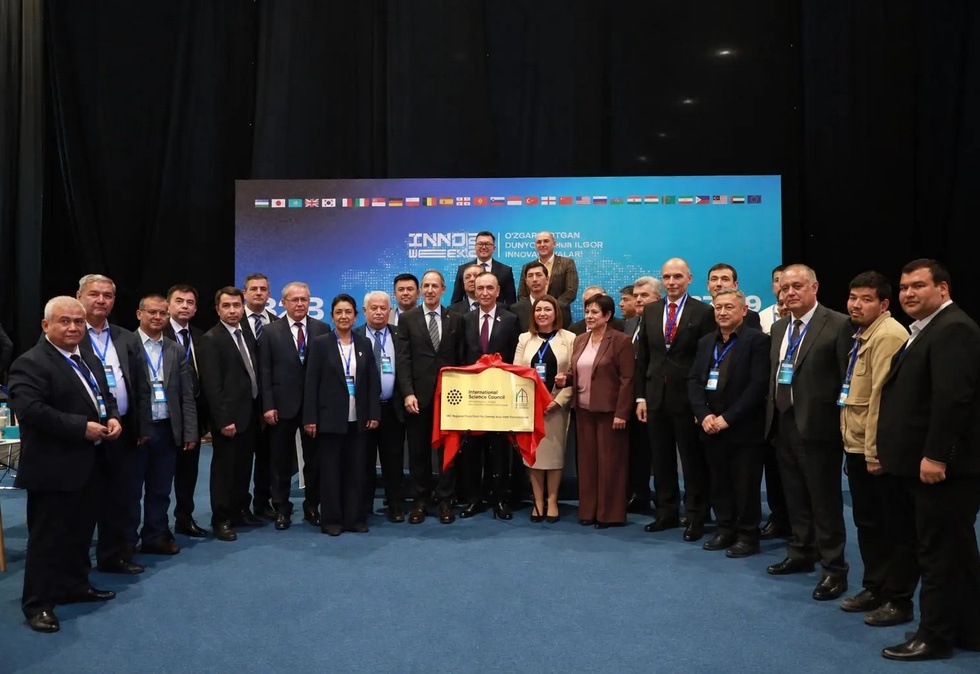
This event was an important step towards the development of scientific cooperation in the region and the expansion of the participation of the local scientific community in international processes.
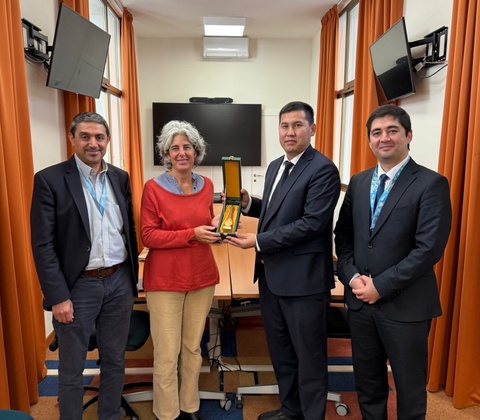
The opening ceremony was attended by the President of the Academy of Sciences, Shavkat Ayupov, and the Chief Executive Officer of the International Scientific Council, Dr. Salvatore Arico. Representatives of the academies of sciences of the countries of Central Asia and the South Caucasus, scientific organizations and international structures were also present.
The opening of a regional office in Tashkent primarily means the creation of institutional opportunities to strengthen cooperation between the scientific community of Central Asia and the South Caucasus with the International Scientific Council, expand the participation of scientists in the region in international scientific processes and joint study of common problems. It is expected that the representative office will facilitate the unification of initiatives implemented by individual countries and scientific organizations, the exchange of experience and the development of regional cooperation.
This cooperation is of particular importance for the scientific study of climate change, rational use of water resources, environmental sustainability and other cross-border issues. Such problems cannot be solved within the framework of one country: this requires the exchange of scientific data, bringing together specialists from different fields and conducting joint research. The regional office creates new opportunities for the development of such cooperation.
Another important area of activity of the representative office will be the expansion of relations between scientists, scientific organizations of the region and international scientific networks. This can help promote joint research initiatives, represent the interests and scientific potential of the region in the international scientific agenda, as well as the effective use of scientific knowledge for sustainable development.
The importance of this initiative for Uzbekistan lies in strengthening the ties of national science in the system of international cooperation and creating conditions for more active participation of local scientific organizations in regional and global scientific processes. The opening of a regional office in Tashkent will also strengthen Uzbekistan's role as an important platform for scientific dialogue and cooperation.
In this sense, the launch of the ISC regional office is not just the opening of a new structure. These are new opportunities for uniting scientists in the region around common goals, the systematic development of scientific cooperation and increasing the practical importance of science for social development.