

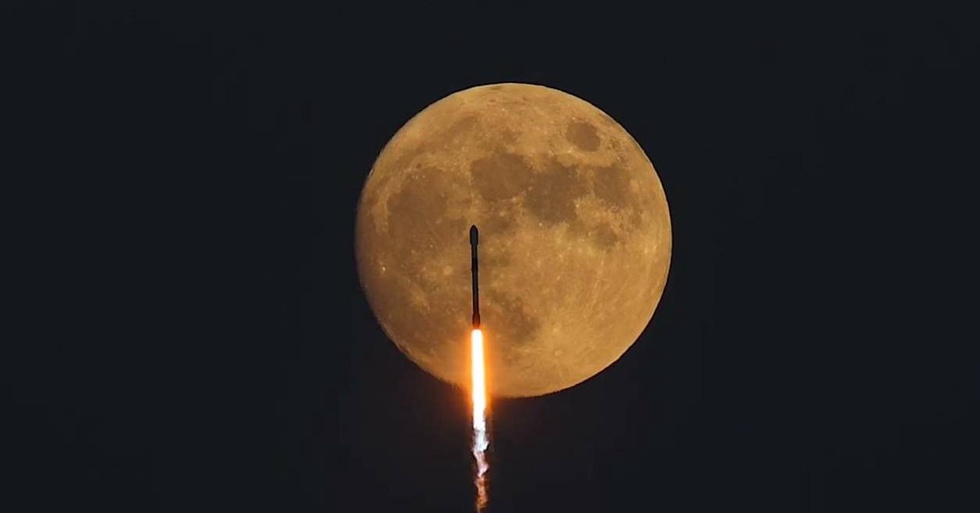
We are
talking about the upper stage of the rocket, which was used when the Blue Ghost
and Hakuto-R Mission 2 automatic lunar vehicles were launched in January 2025.
After completing the main task, the stage remained on a lunar trajectory.
Subsequent calculations showed that the completion of her flight would occur as
a result of a collision with the surface of the Moon. Space.com.
According
to preliminary data, the fall is expected in the area of Einstein crater,
located at the edge of the side of the Moon visible from Earth. The exact
location of the collision is still being clarified. Scientists expect to detect
a flash from the impact, as well as the formation of a cloud of lunar dust that
can rise above the surface of the satellite.
Experts
note that such events occur extremely rarely and are of great scientific interest.
The observations will help to better study the processes of impact crater
formation, the spread of ejected soil, and the behavior of lunar dust in low
gravity conditions.
The data
obtained will also be useful in the preparation of future lunar missions and
the development of methods for observing space collisions.
Both
professional observatories and amateur astronomers are preparing for
observations. Under favorable conditions, the event will be able to be
registered by ground-based telescopes, as well as spacecraft in lunar orbit. In
particular, experts plan to use data from the American Lunar Reconnaissance
Orbiter, which will be able to take pictures of the alleged crash site before
and after the collision.
According
to scientists, this event will be a unique opportunity to test the methods of
registering impacts on the Moon's surface and gain new information about the
dynamics of its surface. At the same time, experts warn that it will not be
easy to see the flash from the Ground - much will depend on the exact location
of the fall, the intensity of the glow during the collision and the conditions
of observation.