
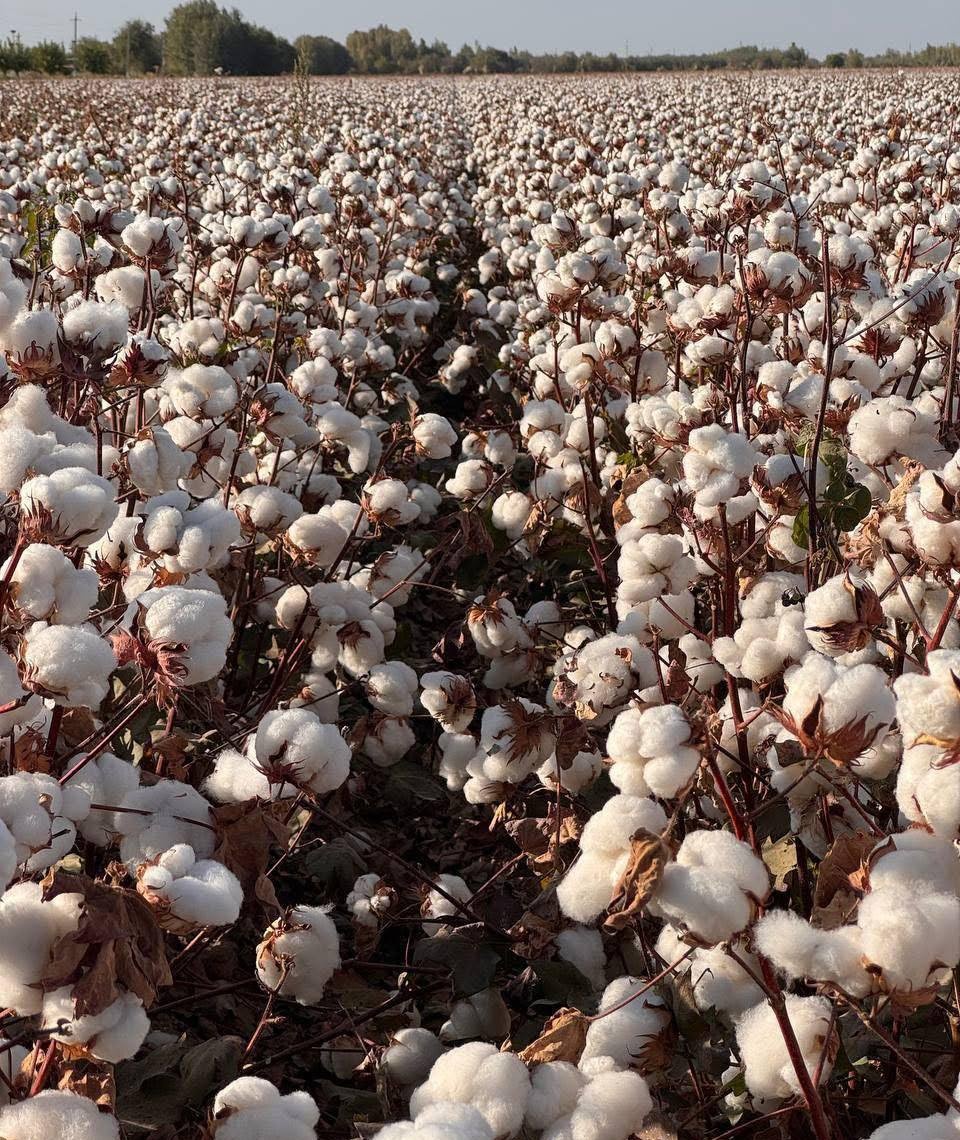
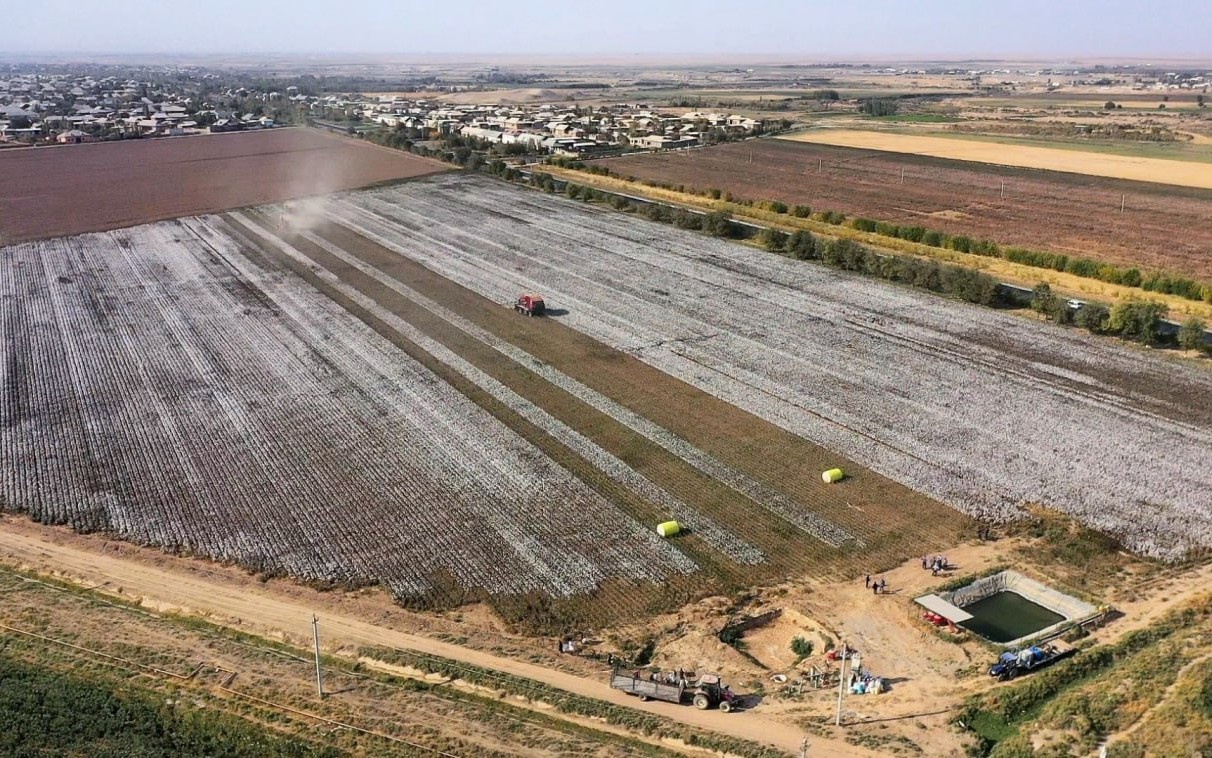
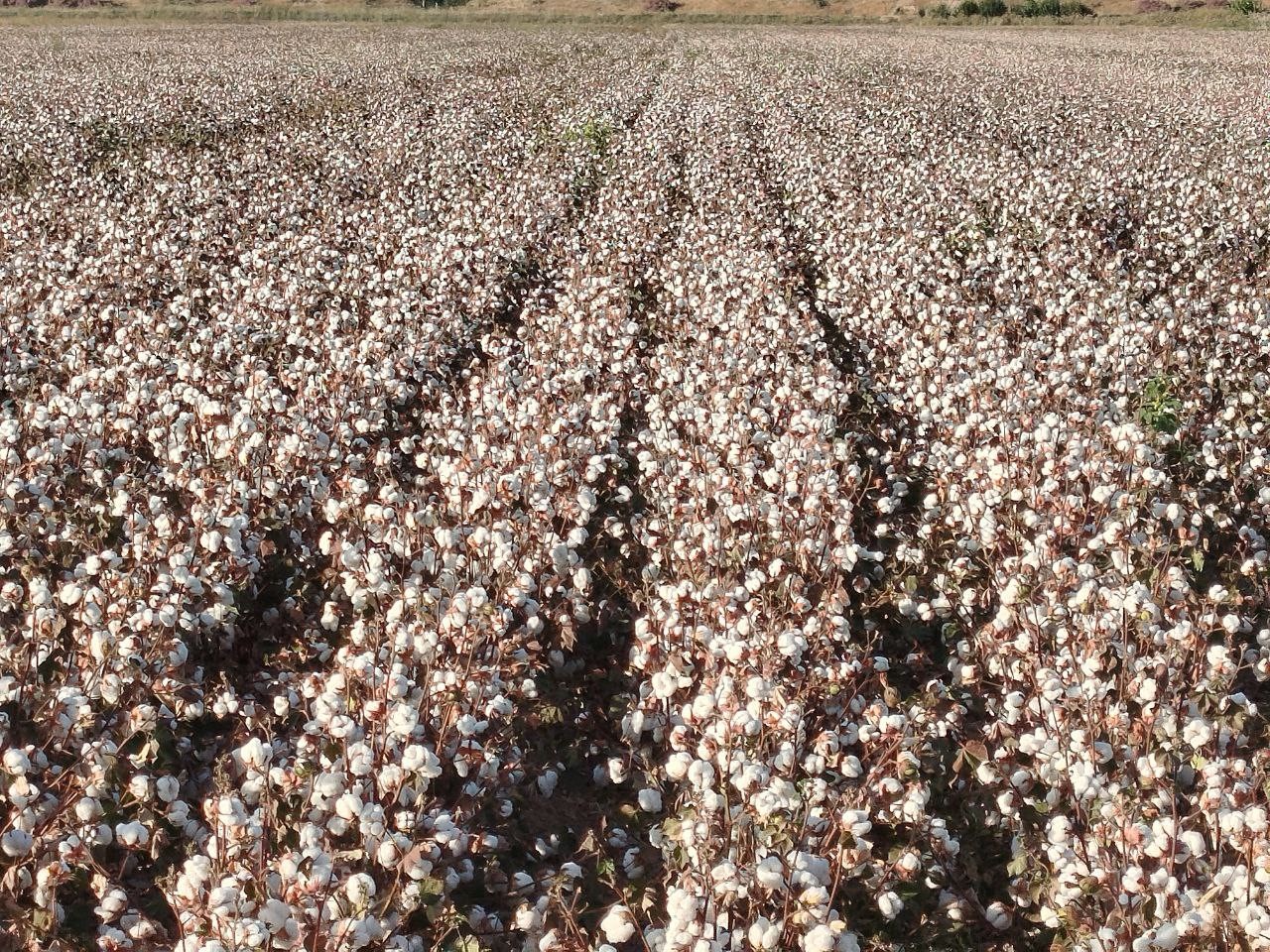
Under the leadership of President Shavkat Mirziyoyev, market principles, support for farmers and clusters, new varieties, high-yield technologies, improved seed systems, water-saving methods, preferential loans, subsidies, machinery, and science-based management systems are being introduced consistently in agriculture, including cotton production. The goal of these reforms is clear: to produce more and better-quality output from less land, increase farmers’ incomes, provide the textile industry with a stable supply of raw cotton, and show the real contribution of cotton farming to our national economy.
Over the past sixty years, cotton yields worldwide have increased significantly. Today, leading countries are achieving very high results: China, producing an average of about 90 centners of raw cotton per hectare, has moved to first place in the world; Australia produces up to 55 centners of raw cotton, and Turkey averages around 50 centners. In Brazil, yields average 40–45 centners. In the United States, Pakistan, and India, depending on conditions, up to 15–25 centners of raw cotton are obtained. The world average is observed at around 30–35 centners.
Against this background, the history of cotton farming in Uzbekistan deserves special attention. For many years, the yield of raw cotton in our country averaged around 25–30 centners per hectare, and in some years, even this level was not reached. For a country that has cultivated cotton for centuries, that has fertile irrigated lands in the Fergana and Zarafshan valleys, and that includes some of the largest cotton areas in the world, such a lag was highly surprising. Last year, however, fields produced up to 70–90 centners of raw cotton, and the national average yield reached 45 centners. This was a significant step forward.
So why did Uzbekistan perform far below its potential in previous years? Where did we go wrong, and what was the reason for last year’s growth? Why did high results appear so suddenly, and what changed? These questions interested everyone. As the person responsible for the sector, I am often asked: “Is this true?” Or, as in the old days: “Is this just talk on paper?” “Well, perhaps once in ten years there is a cotton year, and maybe this was that year?” There are many such doubtful questions.
Over the past eight years, we have changed many things: plant density and planting schemes were renewed, biotechnological varieties resistant to bollworm and weeds were introduced, updated modern local genotypes were zoned for production, the cluster system was launched, and unprecedented state support was put in place. Recently, together with members of the Cotton Council, we published an article in the reputable journal Scientific Reports of the Nature Portfolio, scientifically substantiating historical changes and analyzing forecasts through 2030. The international community has begun to recognize this as a model.
However, within our local communities, the hesitation to ask “Is it really true?” has not disappeared. For this reason, we announced the 8 rules of cotton farming and trained farmers over the past six months. The result is beginning to appear in the field. But now, as the most important stage in cotton farming is about to begin, it is extremely urgent to explain in simple language to everyone that any hesitation and any failure to follow the rules can cause great damage. To make this clearer, let us first speak about the cotton plant and its vegetative period.
Does cotton fully mature in our conditions?
It is no secret that Uzbekistan is located in one of the northernmost regions among cotton-growing countries, and north of us, it becomes much more difficult for the cotton plant to grow steadily and produce a full crop. In fact, in cotton-growing countries of the Americas, Africa, or Australia, where the warm season is long, a cotton plant whose natural vegetation period may last 170–250 days has the opportunity to fully mature. In Uzbekistan, by contrast, although we have sun, warmth, water, farming experience, and a strong culture of crop care, the natural “full” maturation of cotton is not always easy to achieve. In our country, where the practical vegetation window is around 120–130 days, cold days usually begin to be felt in late October and early November; yet even in August and September, and sometimes in early October, the cotton plant continues striving to grow, branch, produce leaves, flower, and set new bolls.
Of course, at this point, we must especially recognize one of the greatest historical achievements of Uzbek breeders over the past century: they made an enormous contribution to turning cotton varieties that are naturally inclined toward long vegetation into cultivated varieties capable of maturing within Uzbekistan’s short 110–130-day season. This is a major success for the country’s cotton farming, our national breeding school, and our science. However, the experience of past years shows that an early-maturing variety alone cannot be a complete solution.
Therefore, even though cotton varieties created in Uzbekistan are early-maturing, the question “Is the cotton plant developing well?” must now be accompanied by other very important questions: “Will it mature on time?”, “Will the bolls open?”, “Will the cotton gain weight?”, “Will all the farmer’s work throughout the season become a real harvest that can be picked, or will part of it remain in the field as unopened bolls?”
In cotton, the real harvest is not the green boll that the eye can count. The real harvest is fluffy cotton that has matured, opened, formed its fiber, filled its seed, gained weight, and been picked. Of course, many bolls standing in the field please the eye. But if those bolls do not open before the autumn cold, if the fiber does not mature and the cotton does not fall into the picking basket, that estimated yield does not become real income for the farmer.
If we look a little deeper into the nature of the cotton plant, it is not an ordinary annual crop of a short season that quickly matures and gives its harvest. In its natural origin, it has perennial, shrub-like and tree-like characteristics. If conditions allow, cotton continues to grow, branches again, produces leaves again, flowers again, and sets new bolls again. This is the purpose and law of life. But if, in farming, we do not manage these natural laws and do not direct the plant to produce its harvest on time, especially in a short-season region such as Uzbekistan, the cotton plant, with its natural tendency toward prolonged growth, will not have time to produce the yield we expect.
History and science show the same thing
If we look at history, the Indigenous peoples of the American continent, in the process of domesticating cotton, found an answer to this natural problem without even knowing it. Before the cold came, they prepared to move to wintering places; while harvesting pepper, they also collected ripe cotton bolls, saved the seed from the bolls that had opened earlier, and sowed them again, together with pepper, in the next season. This seemingly simple farming habit, in other words, the early-maturing pepper crop, helped select early-maturing cotton genotypes. Thus, a plant that in nature lived long and had shrub-like, tree-like traits gradually became a field crop, earlier-maturing cultivated varieties, and a crop whose fiber serves human life.
Later, when Europeans entered the American continent, they spread seed samples of cotton domesticated by the Indigenous population to regions around the world. That is why the genetic base of American cotton, widely grown worldwide today, including in our country and known in science as the Upland cotton group, has historically been relatively narrow, as science has noted. This gives us another important lesson: however important variety may be, it alone does not solve all problems in cotton farming. In Uzbekistan, where the vegetation period is short, maturity-management technology is just as decisive as an early-maturing variety.
So, what path should we take, and can high cotton yields be obtained in Uzbekistan?
Thus, the history of cotton farming, modern science, and Uzbekistan’s field experience all show one truth: cotton is not merely a plant to be grown; it is a plant that must be brought to maturity, properly directed at the end of the season, and helped to transfer all the nutrition it has accumulated into the boll. In simple terms, if cotton varieties are viewed as the technical base of a computer — the hardware — then that computer needs software that ensures maturation. Otherwise, no matter how modern, multifunctional, and high-yielding the computer, that is, the variety, may be, it will not work fully without software; therefore, its yield potential will not fully open.
The positive changes in yield seen in recent years, the results of new varieties and technologies, the experience of farmers and clusters, and the growing attention to scientific recommendations all show that if we approach cotton farming as a system, high yields can be achieved in Uzbekistan’s conditions. But the effectiveness of any reform is seen in the final link — in the field, in technological discipline, in the farmer’s practical action, in the specialist’s supervision, and in the responsibility of local leaders. If the seed is good but planting is late, if water and fertilizer are provided but maturation is not managed, if a product is allocated but not applied properly in the field, if a recommendation is given but not followed because of hesitation or old thinking, the full result of the reform will not be seen in the storehouse.
What is the rule everyone must follow in the coming days?
In cotton farming, the most necessary software for our “smart computers,” that is, our varieties, is the practice of giving an aging signal, dropping the leaves (defoliation), and thoroughly drying the stem (desiccation). Giving an aging signal is new to many people, but regarding defoliation and desiccation, many misconceptions have already formed over the years. This is not only the farmer’s mistake. Sometimes local leaders, and even some breeders, scientist-agronomists, and adviser-specialists, fearing that if leaves are dropped early or the cotton plant is dried, boll weight may fall and the crop may become lighter, have tried in practice to bypass established recommendations. In some cases, defoliation was documented on paper and in reports, but in the field, it was applied too late, too weakly, or incorrectly, without producing a real technological effect. In other words, the computer was left without software, and the final algorithms did not work. This should not be hidden; the right conclusion must be drawn.
For many years, we consoled ourselves by looking at bolls, but did not sufficiently take into account that an unopened boll is not yet a harvest. Looking at green cotton plants, we thought, “The plant is still working; let it give at least one or two more bolls,” but we did not understand that, at the end of the season, greenness is often a sign of delay. We were afraid to drop the leaves, but did not think enough about the fact that if leaves remain, they make harvesting difficult, mix with the fiber, affect quality, and most importantly, part of the plant’s nutrition remains not in the harvest but in the stem and leaves. We avoided desiccation, but could not imagine that the nutrients accumulated in the stem and root might rot when the cold comes, and the farmer’s work might not fully turn into income. Unfortunately, there are still people among us who do not fully understand this.
The greatest loss is often invisible. The farmer looks at the field and is pleased that there are bolls; we, the leaders, are pleased that the cotton plant is green and growing; specialists are pleased with calculations that turn bolls into grams and promise a large harvest. But we do not ask in time: will this boll open, will this crop be picked? If the greenness that pleases the eye does not enter the storehouse as cotton, it is not a real result.
The cotton plant must give its “inheritance” to its children
There is a great law of life: every living being strives to leave behind offspring. A person, too, throughout life thinks about passing on to his children what he has earned, learned, worked for, and loved. In nature, a plant also strives to leave its offspring — its seed. For the cotton plant, this offspring is the seed inside the boll and the fiber around it. In this sense, at the end of the season, the entire task of the cotton plant should be to transfer the nutrition accumulated in its stem, branches, leaves, and roots into the boll, seed, and fiber. In simple words, the cotton plant must give its “inheritance” to its children — the bolls.
But if we do not direct the cotton plant toward maturation on time, then according to the 170–250-day maturation program written in its genetics, even in September and October, when our actual 120–130-day vegetation window is ending, it behaves as if the season is not yet over: it produces leaves again, flowers again, sets small bolls again, the stem remains green, and nutrition in the root and stem continues to be stored in reserve. Because, by its natural program, the cotton plant still hopes to leave offspring, it protects its reserves to feed newly formed bolls. To understand this more easily, imagine a human example: an elderly father who has a late child in his “sixties” or “nineties” does not divide all his wealth among his older children, but, thinking of the younger child, keeps some of it aside. This is the natural law of life — caring for offspring, striving to make them healthy, strong, and viable.
However, this “care” of the cotton plant works only against us in our short-vegetation conditions. Cold comes suddenly, and the new flower and small boll do not have time to mature. The wealth kept in the stem and roots for the late “little ones” does not become harvest. So if, at the end of the season, we do not transfer the nutrition accumulated through water, fertilizer, labor, and sun into the soil, we leave the result of our work in the field.
This is where the true meaning of giving the plant a message that it must begin aging, that is, an aging signal; of stopping the work of the leaves and making them fall, that is, defoliation; and of completing life activity and drying the stem, that is, desiccation. To consider the aging signal unnecessary, saying “let my cotton plant keep working; maybe I will get one or two more bolls and so many centners of cotton,” to view defoliation as simple leaf fall and desiccation as simple plant drying, is a great mistake. In reality, in Uzbekistan’s short vegetation conditions, these processes serve to signal to the cotton plant that the season is ending, to transfer the nutrient reserves accumulated in its stem, branches, leaves, and roots into the boll, seed, and fiber, and most importantly, to turn the yield potential standing in the field as bolls into income. This is an important physiological and agrotechnological process, the essential software — the program — for the cotton plant we have grown.
When the aging process begins, the cotton plant enters the natural completion of the season. During defoliation, the cotton leaf, in harmony with this aging signal, detaches from the stem; leaf activity declines, sunlight and air reach the boll more easily, and harvesting becomes easier. Desiccation, in turn, firmly closes the season, dehydrates plant tissues, stops the remaining life activity in the stem and leaves, and gives the cotton plant its final signal: “now not growth, but maturation; now not a new flower, but the existing boll; now not greenness, but harvest.”
Therefore, the onset of aging, defoliation, and desiccation is not meant to reduce yield. On the contrary, they are needed so that the mature crop does not remain in the field, the boll opens, the remaining nutrition in the stem and leaves is directed toward the harvest, fiber quality is preserved, and harvesting is organized on time. Of course, these measures cannot be applied blindly. If they are done early in the season, before bolls have formed, they may cause damage. The wrong product, the wrong dose, the bad weather, or the wrong machinery will not give results. Therefore, we must approach this issue not with fear and hesitation, but with science; not by chance, but with strict technology.
Four stages — one goal: not to leave the harvest in the field
In Uzbekistan, one of the northernmost cotton-growing regions, there must be clear order and discipline in this matter. Each stage is a link in the chain; if one link breaks, the final result declines.
At the first stage, planting must not be delayed. Completing seed sowing to a high standard within the short, optimal window from mid-March to mid-April is the most important condition for giving cotton sufficient vegetation time. The best result is usually seen in fields planted well in late March and early April. If planting is delayed, every day not given to the cotton plant will show itself later in autumn: in August, the boll will not mature, in September, opening will be delayed, and in October, the risk of cold will rise.
The second important stage is to give the cotton plant the aging or maturation signal at the beginning of August. If a field has around 200,000 healthy plants per hectare and each plant has an average of 8–10 bolls, this means that a serious yield base has already formed. At this moment — on fields planted in late March and the first half of April by August 1, and on fields planted in the second half of April or in May by August 5 — it is necessary to treat with ethephon-containing products. Ethephon is an ethylene-releasing substance, and ethylene is a natural hormone that signals maturation, aging, and the end of the season. In simple words, it tells the cotton plant: “Think now not about growth, but about maturation.”
Having received this signal, the cotton plant, although still green from the outside, begins to change its internal physiological processes: growth slows, biochemical processes prepare for natural completion, and the maturation of existing bolls and filling of seed and fiber become stronger. Therefore, the timely use of ethephon does not make the crop lighter; it helps direct the crop toward maturity. Without giving the aging signal through ethephon, moving to the next stage may not produce the full effect.
The third stage is dropping the leaves, that is, defoliation. About 10 days after treatment with ethephon-containing products, soft-acting defoliants should be applied. In practice, such products contain active ingredients such as thidiazuron and diuron. The purpose here is not to dry the leaf at once, but to gradually complete its activity, detach it from the plant, allow sunlight and air to reach the boll, make harvesting easier, and reduce leaf contamination in the fiber. Defoliation should be done twice, ensuring that leaves on the stem fall completely: the first defoliation removes leaves from the upper and middle parts of the stem, while the second fully removes the lower leaves. Most importantly, soft, orderly defoliation is more effective than a single strong impact because the goal is not to shock the plant but to guide it toward maturity in a controlled way.
The fourth stage is desiccation, the firm closing of the season. Every year, after the average air temperature falls below 22 degrees, but no later than September 1–5, stronger-acting magnesium chlorate salts or desiccants based on the diquat ion may be used. This gives the cotton plant its final signal: the season is over, now give your remaining strength to the boll, and let the field prepare for harvest. From that point on, the nutrition accumulated during the season in the stem, branches, and roots should not remain unused, but should serve the fiber, seed, and open boll.
Here, it is worth emphasizing once again: what matters is not the product name, but the technological discipline. Ethephon, thidiazuron, diuron, diquat ion, and similar active ingredients give direction to the farmer, but every product must be applied only if it is state-registered and legally permitted, at the rate indicated in the instructions, under specialist supervision, and with weather, temperature, humidity, wind, and harvesting capacity taken into account. The view “the more I apply, the faster it will work” is wrong. The view “if I do not apply anything, the harvest will remain heavier” is also wrong. In cotton farming, departing from science causes harm in both cases.
Let the cotton plant’s “inheritance” not remain in the field
In Uzbekistan, by late September and early October, cotton in the main fields should be fully mature, open, and ready for harvest. Waiting for November is risky. In some years, November or December may be warm, but agrotechnology is not built on chance. In cotton farming, we should not rely on the hope that “maybe the autumn will be good,” but on the confidence that “I can bring my harvest to maturity on time.”
At this point, it must be said once more: every field is different. The climate of regions, soil conditions, variety characteristics, water supply, planting dates, plant density, and crop load may vary. Therefore, every measure must be carried out after agronomic assessment and under specialist supervision. But the main principle does not change: in Uzbekistan, it is difficult to obtain a high cotton yield without managing maturation, and without carrying out the aging signal, defoliation, and desiccation on time, correctly, and responsibly. Even if the variety is good, the soil is fertile, water is sufficient, and fertilizer has been applied, the cotton plant will not reach maturity on time if it is not brought to maturity on time, and part of the harvest will remain in the field. Nutrition left in the stem will not enter the storehouse. A small boll and a late flower do not bring income to the farmer. Greenness pleases the eye, but an unopened boll does not enter the picking basket. Therefore, we must change the way we think about cotton farming. Under Uzbekistan’s conditions, completing cotton maturation within a short season must now become a technological obligation.
A large cotton harvest does not appear by chance; it is built systematically. Planting time, plant number, boll number, water, nutrition, pest control, growth control, aging signal, defoliation, desiccation, and timely harvesting are links in one inseparable chain. If one link of the chain breaks, the final result declines. Every farmer, every agronomist, and every local leader must understand this in the same way. As noted above, the priority task before cotton farming in New Uzbekistan is to obtain more and higher-quality harvests from less land, turn farmers’ labor into income, and demonstrate in the field the real effects of the benefits, subsidies, new varieties, technologies, and reforms created by the state. For this, cotton must not only be grown; its maturation must also be managed.
On this path, the aging signal, defoliation, and desiccation are not merely agrotechnical measures. They are a new stage in the culture of cotton farming. In cotton farming, every delayed day has a price. A decision delayed in August will be felt in September. A measure delayed in September will affect the October harvest. A cotton boll that has not opened in October will remain a hope in November, but it may not become income. Therefore, let the cotton plant’s “inheritance” not remain in the field. Let it pass into the cotton boll. Let it be seen in the fiber, the seed, the harvest, the storehouse, and the farmer’s income. For this purpose, the four stages above must become a strict practical principle for every farmer, every agronomist, every district leader, and every specialist in the sector.
The answer to the question at the beginning of the article: one conclusion
The most important lesson we have drawn from the low yields of previous years is this: for many years, we harvested cotton before it had reached sufficient maturity, and we did not fully transfer the “inheritance” left in the stem and roots of the cotton plant into the boll. Today, the most important conclusion must be this: bringing the cotton plant to maturity on time through technological methods, not leaving its “inheritance” in the field, and at the end of the season transferring the nutrition accumulated during the season into the boll, fiber, and seed so that it serves farmers’ income and the national economy — this is the decisive condition for high yields in Uzbekistan’s cotton farming.
Ibrokhim Abdurakhmonov,
Minister of Agriculture of the Republic of Uzbekistan, Academician