
This was announced by Zhang Jiajun, a junior researcher at the Shanghai Astronomical Observatory of the Chinese Academy of Sciences, in the article "Why are we going to Mars?" naked-science.ru.
According to Zhang, before humanity can establish a permanent presence on Mars, it is necessary to solve three main tasks: to ensure the exchange of information between Earth and Mars, to arrange the transportation of goods between the two planets and to create conditions for the survival of people on the Red Planet.
An ultra-long-range radio interferometry-based orbit determination system developed under the supervision of the Shanghai Astronomical Observatory is used for spacecraft communication and navigation. It allows you to accurately determine the trajectories of vehicles heading to Mars, and helps ensure their successful entry into orbit. As Zhang noted, this technology was previously tested during the Chinese Tianwen-1 Mars mission.
The second task is to organize the exchange of material objects between Earth and Mars. Humanity has already learned how to send spacecraft to the Red Planet, but it does not yet have a proven technology for delivering Martian matter to Earth.
According to Zhang, China now plans to take the next step: to deliver Martian soil samples to Earth around 2031. The launch of the Tianwen-3 mission is scheduled for approximately 2028.
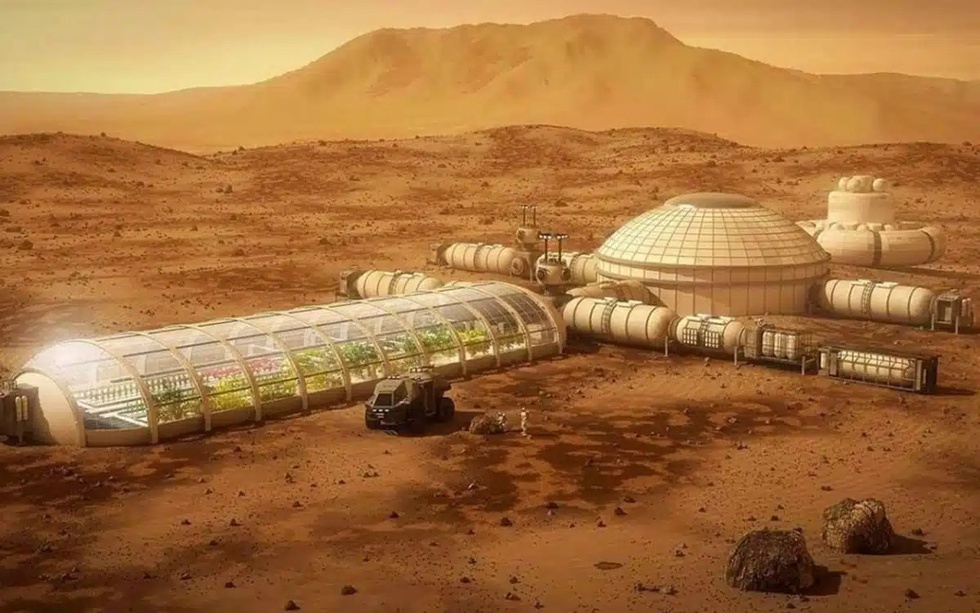
The third task is to ensure human survival on Mars. The planet has extremely low temperatures, high radiation levels, weak gravity and low atmospheric pressure. In addition, access to water and oxygen is limited. According to the scientist, it remains to be seen how to use local resources to support people's livelihoods and conduct research.
Despite these difficulties, Mars remains an achievable goal as humanity moves beyond the Earth—Moon system and begins to explore deep space, Zhang believes.
Mercury is too close to the Sun, and conditions on Venus are extremely unfavorable for exploration. Other celestial bodies are located much further away. Against this background, Mars has a number of advantages: it has a thin atmosphere and water ice, and the length of the day and the change of seasons resemble those on Earth. These features make the Red Planet a suitable intermediate stage on the way to an interplanetary civilization, the researcher noted.