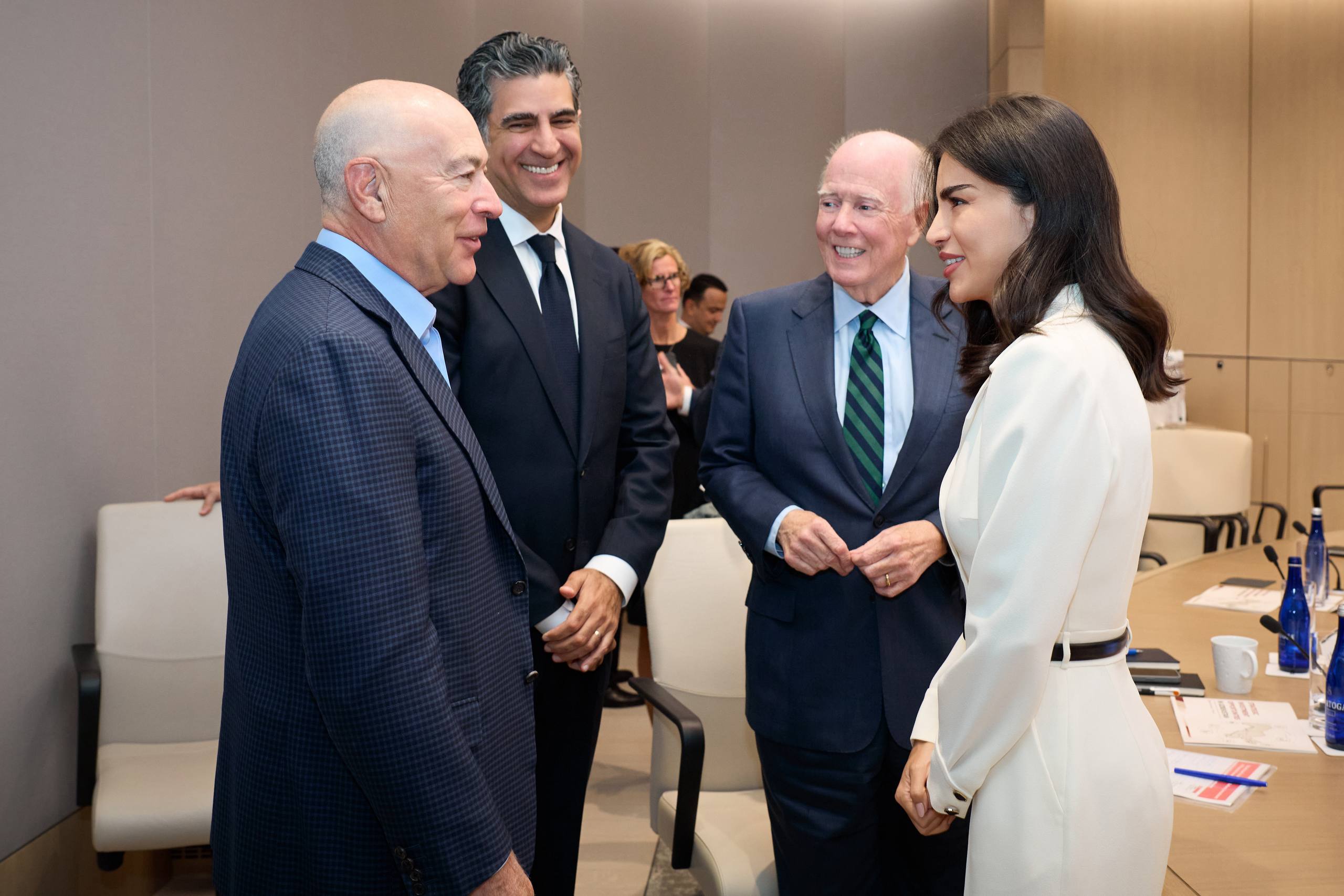

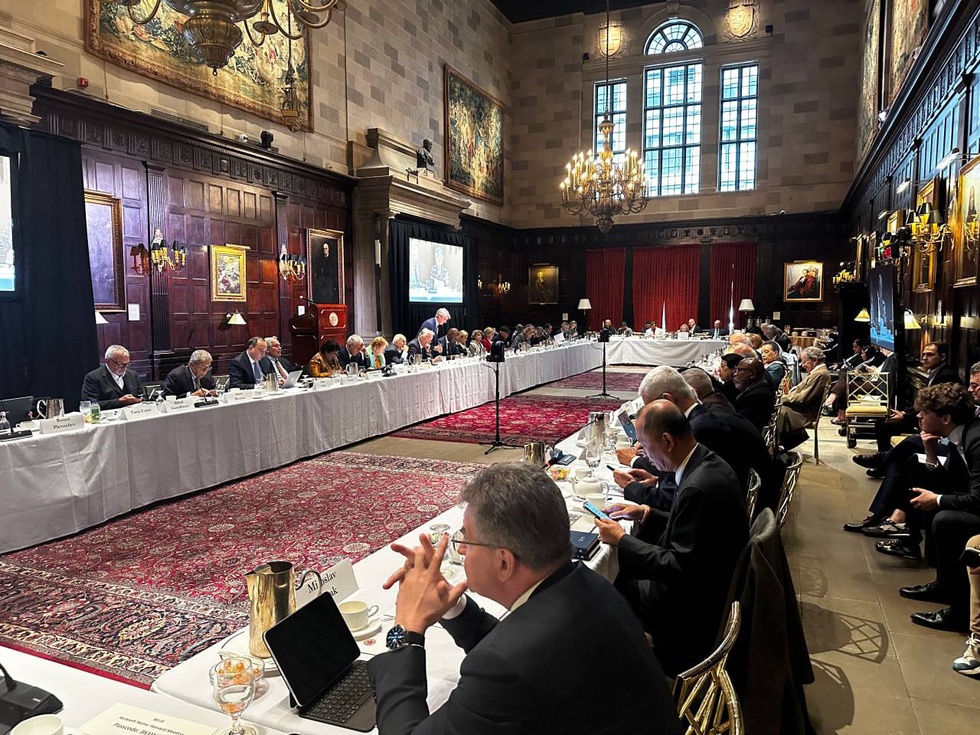
Director of
the Institute for Strategic and Interregional Studies under the President of
the Republic of Uzbekistan (ISMI) Eldor Aripov took part in the event.
The event
became a platform for exchanging views on international cooperation,
sustainable development, climate and energy security, as well as the role of
digital technologies in global governance.
Speaking at
a session on climate cooperation in the context of global fragmentation,
E.Aripov noted that against the background of growing political disunity,
climate change increases the interdependence of states.
According
to him, climate challenges are becoming not only a source of risks, but also an
important incentive for regional cooperation. This is especially evident in
Central Asia, where water, food and energy security are closely interrelated.
According
to his data, the temperature in Central Asia is rising twice as fast as the
global average, and the area of glaciers has decreased by about 30% over the
past six decades. At the same time, glaciers play a key role in the formation
of almost 90% of the region's water resources, feeding the Amu Darya and Syr
Darya, on which agriculture, energy and the lives of millions of people depend.
Demographic
and economic growth increases the need for resources. According to forecasts,
by 2050 the population of Central Asia will reach 100 million people. Demand
for water, food and energy will increase, while climate change makes their
availability less predictable.
Speaking
about the ways to solve these problems, E. Aripov stressed the importance of
regional cooperation. He explained that the UN defines common climate goals,
but achieving them requires taking into account the specifics of each region.
This is especially important because the preservation of river basins and
glacial systems spanning several States is impossible without concerted action.
According
to the Director of ISMI, regional formats are especially important in cases
where global dialogue is difficult. They allow us to continue practical
cooperation and solve common problems.
E.Aripov
also paid special attention to climate finance. He noted that international
support is largely focused on individual countries and projects, although
climate risks affect several states at once.
In this
context, the expert called for the development of financial instruments for
joint projects on the conservation of natural resources and adaptation to
climate change. This approach will allow taking into account the interests of
all countries that depend on the state of the common river basin.
The
director of the ISMI named adaptation to climate change as one of the key
priorities. According to him, along with a long-term energy transition, it is
important for developing countries to solve everyday tasks: to provide farmers
with water, prepare the population for floods and droughts, and preserve
people's sources of income.
In
conclusion, E. Aripov stressed that geopolitical differences should not
paralyze international cooperation. Water resources management, environmental
monitoring, and climate change adaptation should remain areas of sustainable
dialogue.
For
information: The event brought together current and former heads of state and
government, representatives of the United Nations, international organizations,
parliaments, experts and business circles. The honorary participants include
the current Presidents of Latvia and Montenegro, as well as former presidents
and Prime Ministers of Bulgaria, Croatia, Serbia, Slovenia, Finland, Bosnia and
Herzegovina, Austria, Great Britain, Belgium, the Czech Republic, Romania, Greece
and other countries.
Tedros
Adhanom Ghebreyesus, Director General of the World Health Organization (WHO),
Miguel Angel Moratinos, Deputy Secretary General of the United Nations, High
Representative of the United Nations Alliance of Civilizations, and Executive
Secretary of the United Nations Economic Commission for Europe (UNECE)
delivered welcoming speeches at the opening Tatiana Molchan, former Chinese
Government Special Representative for European Affairs Wu Hongbo.