
Although
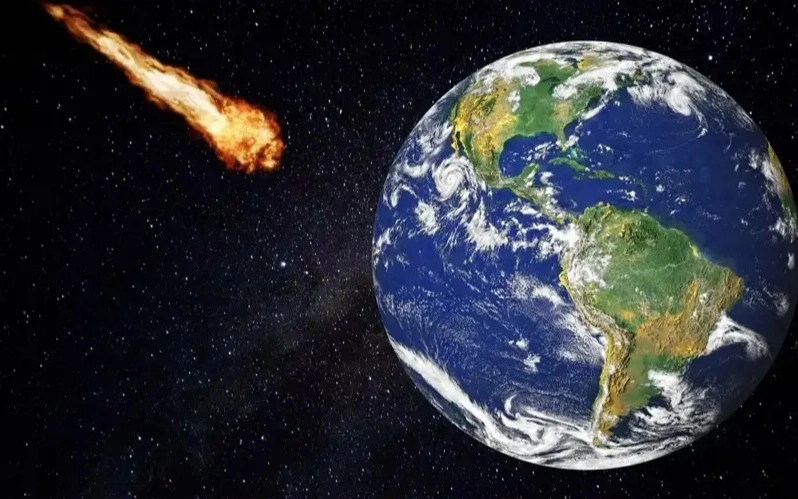
this is considered very close from a cosmic perspective, scientists emphasize
that there is no risk of collision with Earth.
According
to preliminary data, the object will pass at a distance equal to one-quarter of the distance between the Earth
and the Moon. The asteroid was spotted a few days ago by astronomers at
several observatories, including the Farpoint
Observatory in Kansas and the Mount
Lemmon Observatory in Arizona.
Calculations
by NASA’s Jet Propulsion Laboratory
(JPL) suggest that the celestial body’s size ranges between 15 and 30 meters. Experts are
currently refining its orbit and physical characteristics.
To date,
the asteroid has been observed only 24
times over a few days, so its trajectory is still being finalized.
However, current models show no threat of impact.
The object
is classified as an "Apollo"
class near-Earth asteroid. According to NASA, such celestial bodies move
along orbits that intersect with the Earth's orbit around the Sun.